Catches broken service desk automations before they ship
A CLI that checks an exported TOPdesk action sequence for schema errors, broken template syntax and unknown variables.
What was in the way
Action sequences are how a service desk automates itself, and they are configuration rather than code. They get edited in a web form, exported as JSON, and carried between environments by hand.
A mistyped field name or an unclosed template tag looks fine in that form. Some of those mistakes stop the import. The worse ones import cleanly and go wrong later on a real ticket. Checking by hand means opening every step and reading every field.
How it was built
Validate the exported file instead of clicking through the form. Variable references are checked against a registry built from a real variable export rather than the vendor's documentation page, which is incomplete by its own admission. Names that look like undocumented platform variables warn instead of failing, so the check does not cry wolf on something valid.
It is built to be run by an agent as well as by a person. JSON output and distinct exit codes let a generation loop check its own work before a human ever sees the file.
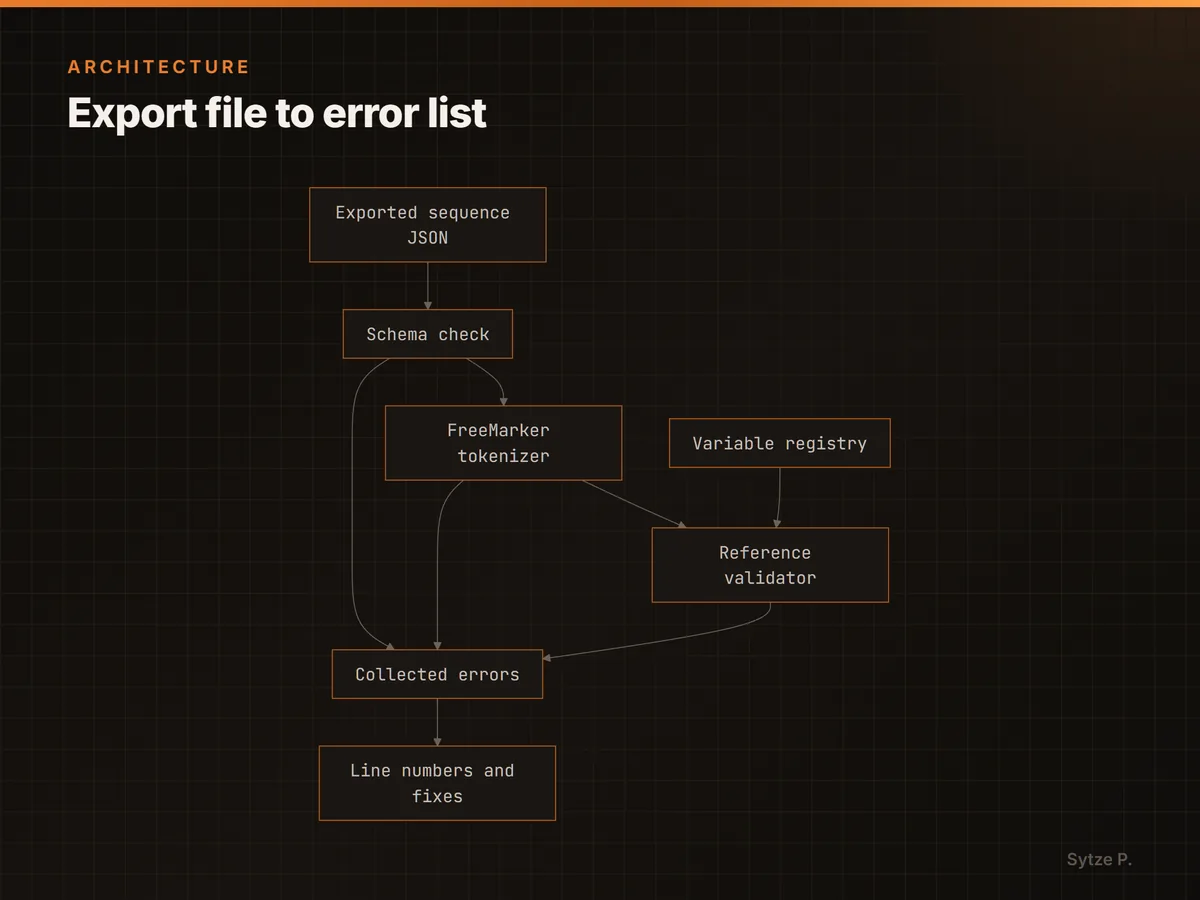
How it works
Errors point at a line, not a file
Every failing JSON path is mapped back to a line and column in the source. The fix is where the message says it is.
Right field, wrong half of the record
Reaching for a field on the current values that only exists on the previous ones is the easy mistake to make. The check names the field, the prefix that would have worked, and the nearest matches for an outright typo.
Warns on the pattern that works until it doesn't
Escalating an incident by hand through a generic update call passes every schema check and still skips the fields the platform sets for you. The validator flags it and names the dedicated endpoint instead.