Finds the right companies and drafts the first email
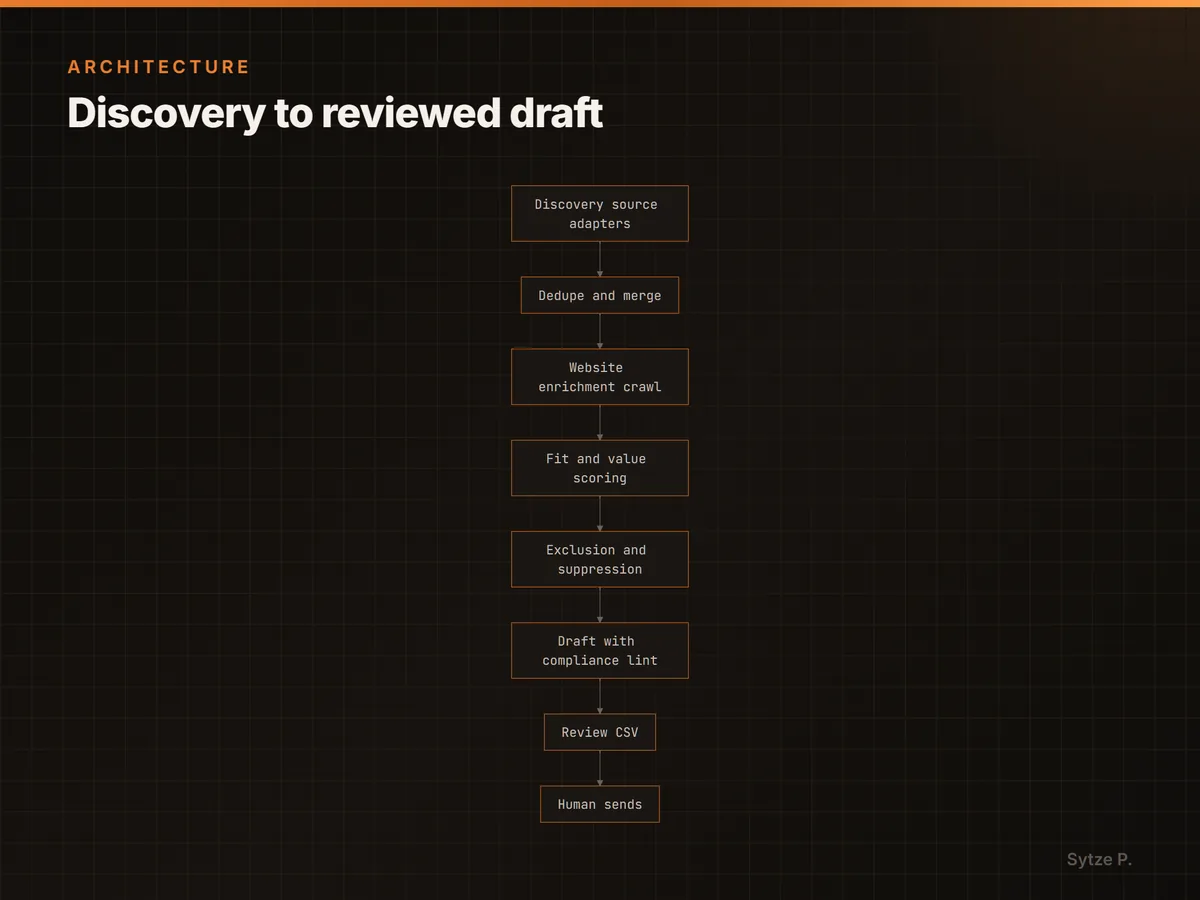
Pluggable discovery sources, website enrichment, dedup and two-axis scoring, then a drafted email a human reviews and sends.
What was in the way
Finding companies worth partnering with is slow, and almost none of it is judgment. Someone searches a trade in one city, opens every result, hunts for a contact address, checks whether the firm is certified and still trading, then writes a first message specific enough to be worth answering.
One city is an afternoon. A whole country is not work a person finishes, so it gets done thinly or not at all.
How it was built
Five stages that each run on their own: discover, enrich, score, draft, export. Discovery sources sit behind one interface as drop-in adapters, and records merge on registrable domain, then phone, then name and postcode.
Ranking splits into two scores that usually get collapsed into one: whether the record is complete and the firm legitimate, and what the firm is worth if they convert.
Scope stops at the draft. There is no send path in the codebase, and every draft passes a written-rules lint before a human reviews it.
How it works
Two scores, not one
Lead quality and worth if they convert stay separate columns in the export, so neither hides the other. High value with no email address moves to a call list instead of being dropped.
Nothing suppressed reaches a draft
Competitor domains, out-of-scope firms and the do-not-contact list are applied before drafting, not at send time. Crawls honour robots.txt and prefer role addresses over personal ones.
Drafts are linted before a human sees them
Formal register, no percentage claims, no unfilled placeholder tokens, no certification claimed that the sender does not hold. A draft that fails the lint is flagged for review, never listed as ready.